Sun protection is often associated with the summer months, when heat and high UV levels pose obvious risks. However, many homeowners, drivers, and business owners are surprised to find that sunlight can feel unusually harsh during the winter months, even when temperatures are low. While overall ultraviolet radiation is typically strongest in summer, the way sunlight behaves in winter creates a different set of challenges that affect comfort, visibility, and long-term interior protection.
Understanding why winter sun feels so intense helps explain why window film is not just a seasonal upgrade, but a year-round solution for homes, vehicles, and commercial buildings.
How Low-Angle Winter Sun Affects Homes, Vehicles, and Buildings
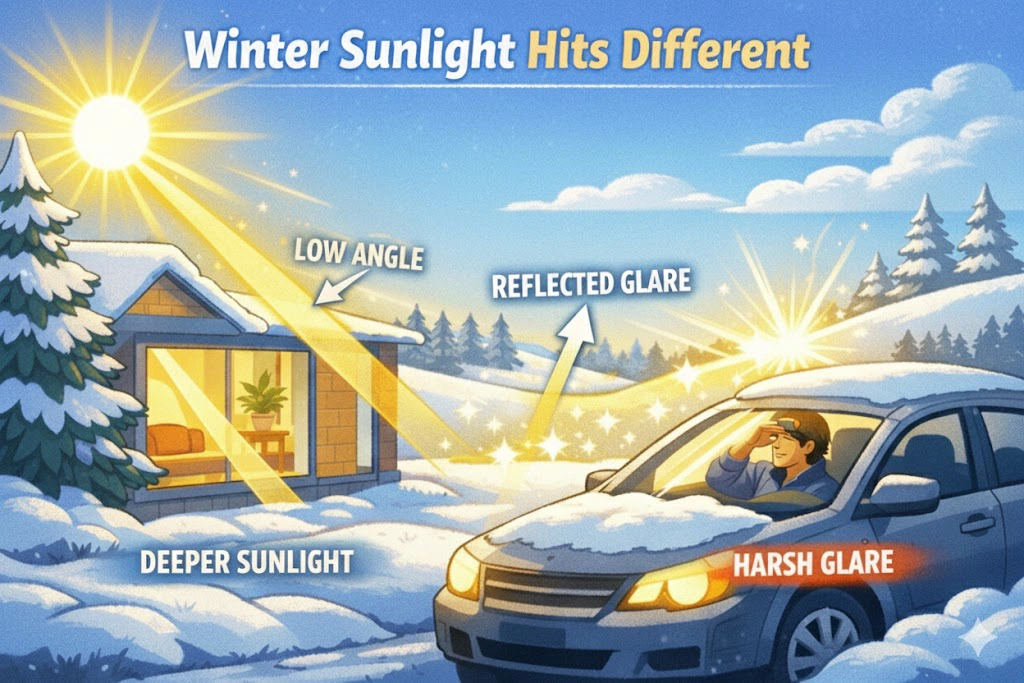
During winter, the sun remains lower in the sky throughout the day. Instead of shining from nearly overhead, sunlight enters at a sharper, more horizontal angle. This low-angle sun penetrates deeper through windows, reaching areas that remain shaded during summer months. Because of this change in angle, sunlight can pass beneath porch overhangs, awnings, and architectural shading features that are designed primarily for summer sun. Interior spaces may feel excessively bright, visually washed out, or uncomfortable despite colder outdoor conditions. In offices and retail environments, this effect can contribute to eye strain and reduced visual comfort for employees and customers alike.
Why Snow Increases Glare and Reflected Sunlight in Winter
Snow significantly intensifies winter sunlight by reflecting it upward and outward. Unlike grass, pavement, or soil, which absorb much of the sun’s energy, snow reflects a large portion of visible light and ultraviolet radiation. This reflection creates a compounding effect, where light reaches the eyes and interior spaces both directly from the sun and indirectly from the ground.
This phenomenon explains why winter glare feels so severe after snowfall and why outdoor activities such as skiing often result in sunburn despite cold temperatures. While total UV levels are lower than in summer, reflected UV exposure still contributes to cumulative skin and interior damage over time.
Winter Driving Glare and Reduced Visibility
Low-angle winter sun is especially problematic for drivers. Morning and late-afternoon sunlight often aligns directly with roadways, while snow-covered surfaces reflect light into the windshield from below. This combination can reduce visibility, increase eye fatigue, and make driving conditions more hazardous.
Automotive window tint helps mitigate these issues by reducing glare and controlling light intensity without compromising clarity. This improves comfort and visibility during winter commutes while continuing to provide year-round ultraviolet protection for vehicle interiors.
Year-Round UV Exposure and Interior Fading
Ultraviolet radiation does not disappear in winter. UV rays continue to penetrate untreated glass throughout the year, gradually fading furniture, flooring, artwork, vehicle interiors, and commercial displays. Even when exposure levels are lower, the cumulative effect remains significant over time.
High-quality window film blocks up to ninety-nine percent of harmful UV rays, offering consistent protection regardless of season. This makes window film an effective long-term solution for preserving interior materials in residential, automotive, and commercial environments.
How Window Film Improves Interior Comfort in Every Season
Window film addresses the specific challenges created by winter sun while continuing to deliver benefits throughout the year. In residential settings, it reduces harsh glare and protects furnishings while maintaining natural light. In vehicles, it improves driving comfort and visibility during low-sun conditions. In commercial buildings, it creates a more balanced visual environment, reduces eye strain, and protects interior investments from fading.
Rather than responding to sunlight only during summer heatwaves, window film provides continuous performance that adapts to seasonal changes in sun angle and light behavior.
Why Sun Protection Should Not Be Considered Seasonal
Although summer produces the highest UV levels of the year, winter sunlight introduces its own comfort and visibility issues through low-angle exposure, increased glare, and reflected light from snow. Window film offers a practical, year-round approach to managing sunlight, protecting interiors, and improving daily comfort across homes, vehicles, and commercial spaces.